C
Chim-Tex Construction Co.
Menu

Fireplace Services

The work the
company was built on.

Since 2008 we have installed, swapped, converted, and rebuilt fireplaces across the Houston metro and statewide. New construction. Major remodels. Coastal homes. Lake-country builds. Historic restorations. Modern linear gas, traditional wood-burning, electric appliances, outdoor builds large enough to anchor a whole patio.

What separates our fireplace work from a one-trade installer is the eight-trade integration behind it. Framing, venting, gas, electrical, masonry, steel work, surround, finish. All in the same engagement. One crew. One timeline. One written warranty.

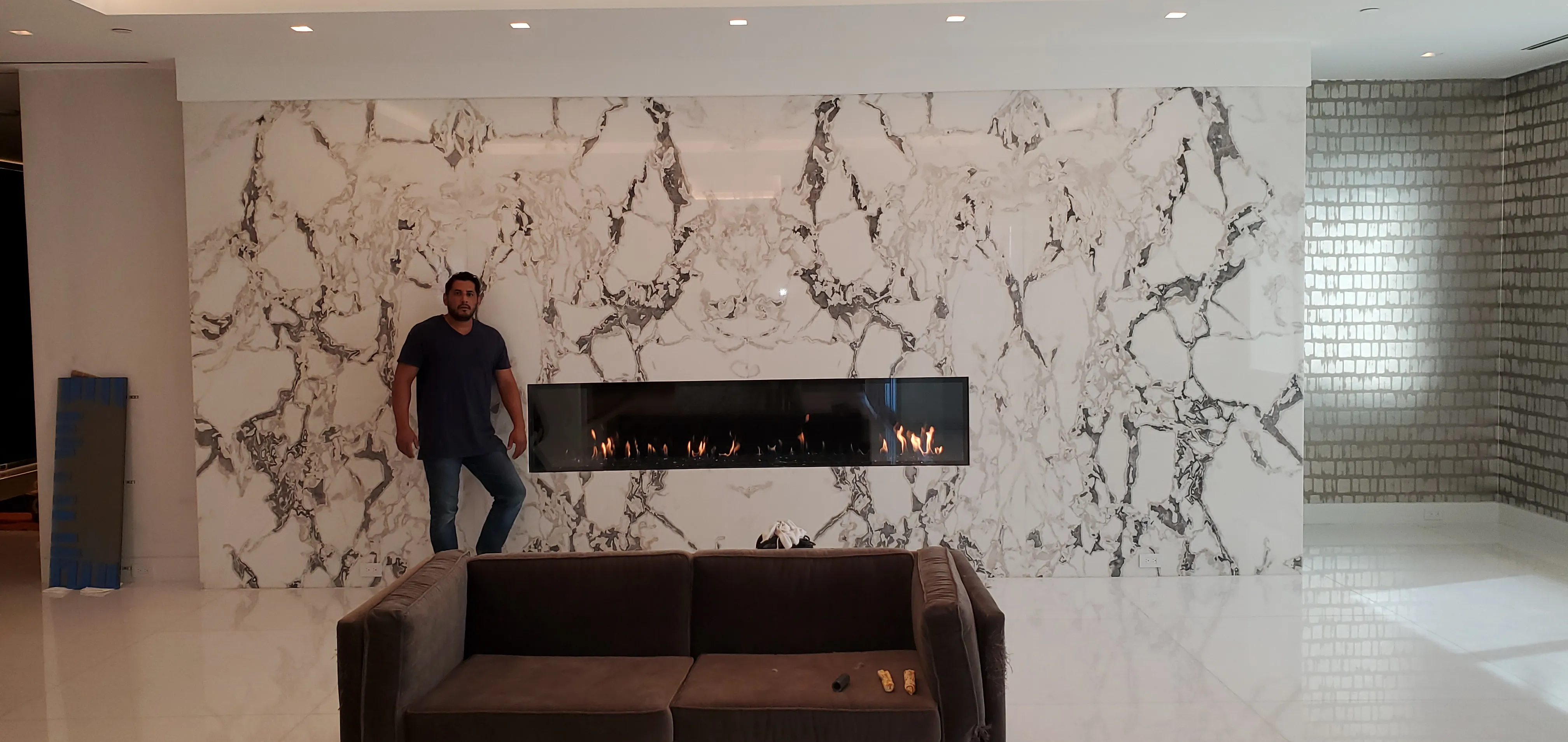
A premium marble linear gas fireplace install by Chim-Tex Construction
Dallas install. Custom marble linear gas. Premium architectural integration.
01

New fireplace installation

New construction or a major remodel. Modular masonry, full masonry, factory-fabricated metal box units, wood-burning, electric, or custom builds. We frame the chase, run the venting or the Class A chimney depending on fuel, install the firebox, dial in the gas line and ignition, build the surround in stone, tile, brick, or steel, and finish the trim work in the same engagement. Lead time runs three to six weeks for typical builds, six to ten weeks for large custom builds with significant masonry or steel fabrication.

What is included

  • ·Framing and chase construction
  • ·Class A chimney for wood-burning; direct-vent or B-vent for gas
  • ·Gas line install and pressure test
  • ·Electrical for ignition and blower
  • ·Surround in stone, brick, tile, or steel
  • ·Mantel and hearth detail
  • ·Final inspection and permit close-out per NFPA 211, IRC, and IFGC
  • ·Written workmanship warranty
02

Fireplace swap-out and conversion

Tearing out an existing builder-grade prefab or an old open wood-burner and replacing with a modern direct-vent gas unit, an electric appliance, or a closed-combustion wood-burner. The work usually involves addressing latent chimney or vent issues, code-updating the chase to NFPA 211, and re-doing the surround. Lead time runs five to fifteen working days.

What is included

  • ·Demo and disposal of the old unit
  • ·Chimney or vent inspection and replacement where needed
  • ·Gas line modification or addition
  • ·New unit install per manufacturer spec
  • ·Surround refresh in tile, stone, or paint
  • ·Mantel adjustment or replacement
  • ·Final inspection where required
03

Appliance and conversion specialist

Converting an open wood-burner to a gas or electric appliance is the most common request we get. The reason is the math: older open wood-burners send eighty to ninety percent of the heat up the chimney. A modern direct-vent or closed-combustion appliance pushes seventy to eighty percent into the room. We size the appliance to the firebox, confirm whether the flue is a Class A chimney (wood-capable) or a lighter vent class (gas-only), and confirm the chimney draft profile before quoting.

What is included

  • ·Existing unit inspection
  • ·Appliance sizing and selection
  • ·Liner install (rigid or flex) per NFPA 211
  • ·Surround integration to hide the conversion
  • ·Remote control and smart-home integration where requested
04

Outdoor and patio fireplaces

Outdoor builds are about half our calendar between March and November. Designed for Houston climate: humidity, sun, occasional hurricane wind, and the customer's actual entertaining patterns. We coordinate with landscape, pool, and outdoor-kitchen contractors when the build is part of a larger backyard project. Lead time runs four to eight weeks.

What is included

  • ·Slab integration or new pad pour
  • ·Stone, tile, stucco, or steel surround
  • ·Outdoor-rated firebox and components
  • ·Gas line from the meter (typically 1/2" CSST)
  • ·Optional TV mount and weatherproof outlet
  • ·Integration with outdoor kitchen if present
05

Repair and inspection

Cracked fireboxes, failed chimneys, water intrusion at the cap or flashing, gas-line leaks, rust-throughs on coastal installs, and the kind of "I do not think this is right" feeling that homeowners get when an older fireplace starts smelling smoky. We diagnose, document, and quote the repair scope against NFPA 211. If the right answer is a full rebuild we say so up front.

What is included

  • ·Visual and structural inspection to NFPA 211
  • ·Chimney sweep and creosote evaluation
  • ·Smoke and gas leak testing
  • ·Photo documentation
  • ·Written report with quoted repair options
06

Custom design and build

When the architecture or the customer's vision pushes past what a factory-built unit can do, we design and fabricate the firebox ourselves. Welded steel shells, see-through configurations, floor-to-ceiling stone faces, indoor-outdoor crossovers, premium marble and quartzite installs. This is where the eight-trade integration matters most: nothing about a custom build is standard.

What is included

  • ·Architect or designer collaboration
  • ·Engineered steel firebox fabrication
  • ·Custom Class A chimney or direct-vent routing
  • ·Premium stone, marble, or tile fabrication
  • ·Concealed gas and electrical
  • ·Documentation and inspection package to NFPA 211, IRC, and IFGC

Code and construction notes

What the inspectors check.
What we already know.

Fireplace work is heavily code-governed. The IRC, the IFGC, and local jurisdictional amendments all apply. Most of the rework callbacks we see from other contractors trace to a code spec that someone missed. The detail below is the short version of the categories we plan around on every project.

NFPA 211 is the chimney bible

The National Fire Protection Association Standard 211 governs chimneys, fireplaces, vents, and solid-fuel-burning appliances. It is the authoritative reference for anything that carries flame or exhaust. We work to NFPA 211 alongside the IRC and IFGC on every project.

Class A chimney (wood-burning)

A Class A chimney is a triple-wall solid-fuel chimney system rated to 2,100 degrees Fahrenheit. Wood-burning units require a Class A chimney; it is more robust than any gas vent. A Class A chimney can serve as a vent for a gas unit if the sizing is right, but no gas vent can ever serve as a chimney for a wood unit. Terminology matters here and we get it right.

Direct-vent (gas only)

Sealed combustion, vented through an outside wall or roof. Gas units only. Direct-vent cannot carry solid-fuel exhaust. Most modern gas fireplace installs use direct-vent for the efficiency and safety of the sealed combustion.

B-vent (gas only)

A natural-draft gas vent that uses ambient room air for combustion and exhausts up an open flue. Gas only, not solid fuel. Cheaper to install than direct-vent but less efficient and with more code restrictions.

Gas line sizing

Most residential gas fireplaces run 1/2" CSST or black iron from the meter. Larger units and outdoor builds with kitchen tie-ins often need 3/4" or 1" supply. We pressure-test every gas install to IFGC.

Hearth clearance

Wood-burning units require a non-combustible hearth extending 16-20 inches in front and 8 inches to the sides depending on opening size, per IRC R1001 and NFPA 211. Gas units have manufacturer-specific clearance specs.

Mantel projection

Combustible mantel materials require minimum vertical clearance from the firebox opening per IRC R1004.2. We design surrounds that respect the manufacturer spec without sacrificing the visual.

Outdoor gas appliances

Outdoor fireplaces fall under IFGC and have specific requirements for outdoor-rated valves, ignition modules, and gas line corrosion protection. We use components rated for the actual exposure.

Frequently asked

Fireplace service questions
we hear constantly.

Can you replace an old gas log set without tearing up the firebox?

Usually yes. If the existing firebox is structurally sound and the gas line is in good condition, a gas-log swap takes one to two working days and runs $1,500 to $4,000 depending on the log set you choose. If the firebox has cracks, the gas line is corroded, or the venting has failed, the right answer is a more complete replacement and we will tell you so.

What is the difference between a direct-vent appliance and a B-vent unit?

Direct-vent units are sealed: they pull combustion air from outside through a coaxial vent and exhaust through the same vent. They are safe in any room because they cannot pull air from the living space. B-vent units use ambient room air for combustion and exhaust up an open flue. B-vent units are cheaper to install but less efficient and have more code restrictions. Direct-vent is what we install most of the time.

How efficient is a modern gas fireplace?

A modern direct-vent gas fireplace delivers 65% to 80% of its fuel energy as room heat. An open wood-burning fireplace delivers 10% to 20%. A high-end closed-combustion wood-burning appliance delivers 65% to 75%. Efficiency is one of the main reasons customers convert from open wood-burners to direct-vent gas.

Can I add a fireplace to a house that does not currently have one?

Yes. Direct-vent gas fireplaces do not require a traditional chimney, which makes adding one to an existing house feasible. The vent can run horizontally through an exterior wall or vertically through the roof. The hardest parts are usually finding a wall location that works with the room layout and getting the gas line where it needs to be. We handle both.

How long is the warranty on the work?

Our workmanship warranty runs five years and covers installation defects, venting failures attributable to our install, and gas line issues attributable to our install. Factory-built fireplaces carry their own manufacturer warranty (typically lifetime on the firebox, ten years on burner components). We provide written documentation of both at handoff.

Do you work with my architect or builder?

Yes, often. For new construction and major remodels we are happy to coordinate with the architect, GC, and other trades. Bringing us in during design rather than after framing saves money and prevents the kind of late-stage revision that adds weeks to a schedule.

What about chimney sweeping and inspection?

We do both as standalone services and as part of larger projects. CSIA-certified sweep and Level 1 inspection run $250 to $450 depending on chimney height and condition. Level 2 inspection (used for real-estate transactions and after a major event like a chimney fire) runs $450 to $800.

Talk to Lou

Send a few photos.
Get a real answer.

A couple of photos and a description is enough to start. We'll tell you within a business day whether it is a swap, a conversion, or a full rebuild, and what each one would run.

Start a Conversation

Lou reads every message. Reply within one business day.